A little while ago, I began reading a beautiful book called The Hidden Lamp: Stories from Twenty-Five Centuries of Awakened Women, edited by Florence Caplow and Susan Moon. I hadn’t even reached the koans yet; I was still in the introduction when I came across something that broke my heart. The editors describe the obstacles women faced simply to be allowed to practise. In some cultures, a woman needed permission from the men in her family before she could be ordained. Women were kept at home to cook, clean, raise children and serve the family.
They also recount how a few women scarred their own faces so they could enter monastic life without their beauty being considered a distraction to the monks.
Just sit with that for a moment.
A woman wanted to practise, to understand her own mind and realise her true nature. She wanted to give her life to that longing which, in my own language, I would call the longing for God or Home with a capital H. And somehow, her face stood in the way.
I keep thinking about the women behind these stories. How deeply they must have longed for the freedom to follow their path. How painful it must have been to feel that this was what it would take to be allowed through the door. I wish someone had opened the door for them while their faces were still intact.
As a woman in robes myself, I feel such tenderness towards these women. And such gratitude. The Hindu sannyasinis, Buddhist and Jain nuns, Christian sisters, and women across religious traditions who devoted their lives to something the world could not always understand or accommodate.
Their lives made it possible for me even to imagine that monkhood could be a choice for me. That I, too, could give my life to spiritual practice and selfless service. That a woman’s longing for God could be taken seriously enough to become the centre of her life. To all those women who went before me: Thank You. Thank you for your devotion, your persistence, and all the struggles I will never fully know. Thank You for the doors you managed to open, and for continuing to practise when they remained closed. I honour you. I wish your journeys had been gentler, and I do not take for granted the freedom with which I wear my own robes.
And, of course, my deepest gratitude to my own Guru, Om Swami ji, for opening that door for women in His lineage. When I first read His book, I had no idea whether He ordained women or not; I just knew that I had found my Guru and that this was to be my life. Had He chosen not to ordain women, I may never have had the privilege of wearing these robes. For that, amongst the countless other things I have to thank Him for, I am deeply, deeply grateful.
This also makes me turn towards something I love so deeply about Sanatana Dharma. We can call God Ma. Such a small word. And yet, for me, it holds so much. Somewhere to bring the whole of myself: the love, the longing, the questions, the tears, and the occasional quibble. Yes, those too, I bring to Her. I suspect the Divine Mother can cope with a little grumble from Her child!
There is such beauty in a tradition that gives us so many ways to recognise and love Her. Ma Saraswati, with Her wisdom and music. Ma Lakshmi, with Her beauty and abundance. Ma Durga, with Her courage and protection. Ma Kali, fierce and magnificent, rather unconcerned with making everyone comfortable. Nobody seems to have told Ma Kali to tone Herself down a bit ☺️
There is so much here to celebrate, cherish and carry forward. And that is why the gap between reverence for the Divine Feminine and the treatment of an actual woman can feel so painful. We can bow before Her wisdom, sing of Her strength, and then become distinctly uncomfortable when a woman in front of us has an opinion, especially if she expresses it without first apologising.
In some male monastic traditions, a woman’s presence has been treated as a danger to a man’s spiritual life. Her own spiritual life is immaterial. The fear of her body, her sexuality or her independence overshadows her sincerity. It makes me wonder how much of society’s conditioning carries the weight of religious authority.
How often is a woman admired for what she can quietly endure? She is patient. She is forgiving. She keeps the family together. But when she finally says that something hurt her, the conversation can become all about her decision to speak. Why now? What will people think? Couldn’t she have kept it private? Before long, what happened to her has almost disappeared beneath the discussion of whether she should have mentioned it.
Sometimes I wonder whether, in a very different way, I am offering up my own face on this blog. The composed, respectable face. The one that might be easier to approve of if I left out the awkward bits: the hurt, the mistakes, the complicated relationships, the questions a woman in robes perhaps isn’t ‘supposed’ to ask aloud. The experiences of the scarred-faced women and mine are worlds apart, of course, but how much of the acceptable image of ourselves must we be willing to lose to live truthfully?
Sometimes I wonder whether I would be better off being a little more mysterious: a few serene photographs and a lovely quotation here and there 😄But that would be too easy, right?
When will we all see that a spiritual life CAN include a difficult history; devotion CAN live alongside questions. We can be sincere in our practice and still be learning how to speak about what once hurt us. Surely a woman can seek God without having to make herself disappear.
I keep coming back to the importance my Guru places on how we actually live. Are we kind? Can we listen? Can we acknowledge where we have judged others and the hurt we have caused too? Can we forgive, keep learning and do something useful for the world with all this love and compassion we talk about?
These questions matter whether we wear robes or have never uttered a prayer.
My sadhana (spiritual practice) helps me look more closely at the things I have learned to recoil from. Is something truly harmful, or have we simply been taught that decent people don’t discuss it? A taboo deserves examining when it keeps suffering hidden.
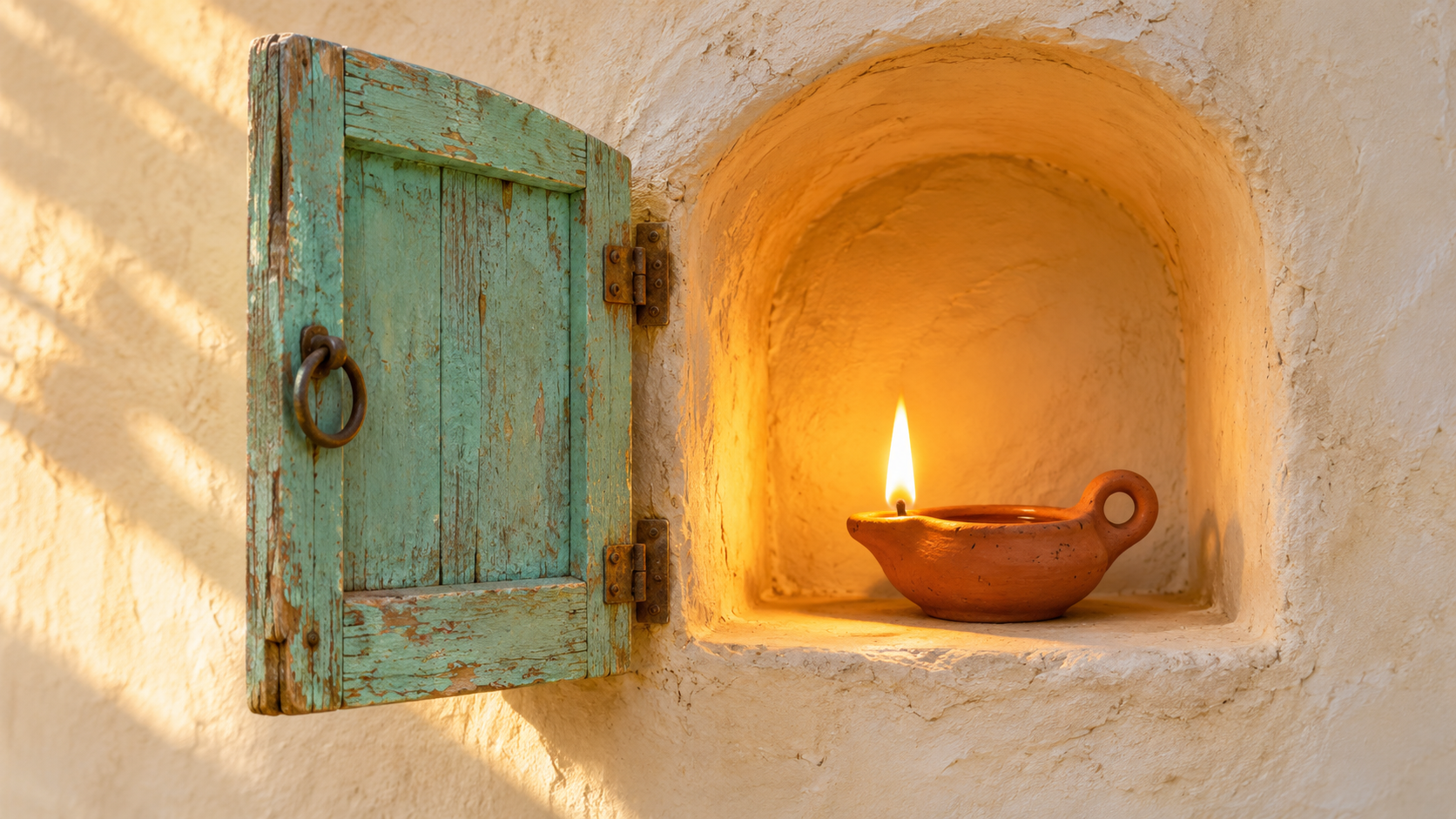
The lamp those women kept alight is still helping me find my way. They helped make this life imaginable, and I hope that, in whatever small way I can, I might help another woman feel that her own calling is worth listening to, whether it takes her into an ashram or monastery or asks her to live more truthfully where she already is.
I bow to the women whose names have reached us, and to those whose names are lost. To their love, their courage, and the longing that kept them going. May we honour them by making the path kinder for those who come next. And may our love for the Divine Mother become so much a part of how we live that every door is open for a woman, and she can walk through unscarred, intact, whole.
Shine brightly, my dear loved ones🧡🪔